
The journey toward achieving a major goal often feels like climbing a mountain where the summit is obscured by clouds. Whether you are aiming to write a novel, save a specific amount of money, or complete a massive fitness challenge, the scale of the task can be paralyzing. Many people quit before they even start simply because the finish line seems light-years away. However, success is rarely found in the grand gestures; it is found in the incremental, consistent steps we take every single day. When you shift your perspective to focus on the immediate win—such as completing 5 of 1500 units toward your goal—the entire landscape of your ambition changes. This shift is not just about math; it is about psychological reframing, turning an overwhelming marathon into a series of manageable, rewarding sprints.
The Psychology of Breaking Down Big Goals
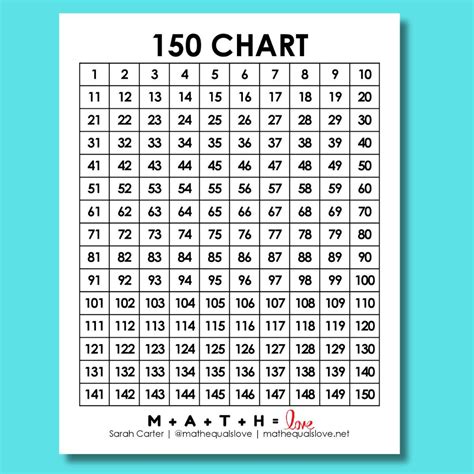
Our brains are naturally wired to seek instant gratification. When we face a task that requires thousands of iterations, our motivation often dips because the reward feels delayed. By focusing on 5 of 1500, you are effectively hacking your brain’s reward system. Each small increment acts as a micro-milestone, providing a hit of dopamine that keeps you engaged. This is known as the "small wins" strategy, a powerful productivity technique used by top-tier athletes and high-performing entrepreneurs alike.
- Reduced Cognitive Load: Breaking 1500 tasks into chunks of 5 makes the project feel less intimidating.
- Increased Momentum: Once you hit the first 5, the psychological barrier to starting is gone.
- Better Tracking: It is significantly easier to monitor progress when you look at small, defined blocks of work.
When you commit to doing 5 of 1500 each session, you aren't just doing work; you are building a habit. Habits are the backbone of success. If you try to do 500 at once, you might burn out. If you do 5, you can sustain that pace, eventually reaching the 1500 mark with much higher quality and far less stress.
Visualizing Your Progress
Visualization is more than just positive thinking; it is a strategic tool. When you are working on a massive project, you need a visual representation of your progress to keep your morale high. Keeping a physical tracker where you can physically cross off or color in 5 of 1500 segments allows you to see the "gap" between where you are and where you want to be closing in real-time.
To give you an idea of how this progress tracking can be structured, consider the following layout for a 300-session cycle to reach your 1500 total:
| Phase | Progress Target | Cumulative Total |
|---|---|---|
| Phase 1 | 5 of 1500 | 5 |
| Phase 2 | 5 of 1500 | 10 |
| Phase 3 | 5 of 1500 | 15 |
| Phase 4 | 5 of 1500 | 20 |
This table illustrates how steady progress compounds. By the time you reach the 20th iteration, you have already completed a significant portion of your daily quota, and the 1500 goal feels much less like a distant dream and more like an inevitable reality.
💡 Note: Tracking your progress digitally or on paper is essential. Without a visual record, you lose the sense of accomplishment that fuels your momentum for the next 5 of 1500.
Maintaining Consistency Over Intensity
The biggest trap people fall into is prioritizing intensity over consistency. You might see someone who did 500 in a single day and feel pressure to match that output. However, that high-intensity approach often leads to burnout or injuries. The philosophy of 5 of 1500 is centered on longevity. It is better to show up every single day and perform a small amount of work than to perform a massive amount sporadically.
Consistency creates a rhythm. When you make the decision to complete your 5 of 1500 daily, you are signaling to your subconscious that this project is a priority. Soon, you won't even have to think about starting; your body and mind will naturally drift toward the task at the designated time. This is how masters are made—not in a single burst of inspiration, but through the accumulation of tiny, disciplined actions.
Overcoming Plateaus and Slumps
Even with a solid plan, you will inevitably hit a slump. There will be days when the 5 of 1500 feels like an impossible burden. During these times, the secret is to lower the barrier to entry even further. If you truly cannot do 5, aim for 1. Just starting is often the hardest part of any task. Once you have done the first unit, you will often find that you have the energy to complete the other four.
Remember that the goal is not to reach 1500 by tomorrow, but to build a system that reaches 1500 sustainably. If you feel like your progress is stalling, change your environment or your method, but keep the core principle of small, iterative gains intact. If you lose focus, look back at the blocks you have already completed. Seeing those finished segments reminds you of your capacity to succeed.
💡 Note: If you miss a day, do not try to make it up by doing double the work. Simply resume your normal pace of 5 of 1500 to avoid the trap of "punishing" yourself, which only decreases your motivation.
Scaling Your Ambition
Once you successfully reach 1500 using this methodology, you will realize that you have developed a superpower: the ability to execute on long-term goals. You can apply the 5 of 1500 framework to anything. Whether it is learning a language, coding a complex application, or mastering an instrument, the math remains the same. You are essentially teaching yourself how to be patient, how to be disciplined, and how to trust the process.
When you scale your ambition, you might find that you can eventually increase your capacity from 5 to 10 or 20. That is the beauty of this framework; it is modular. It grows with you as your skills improve and your habits become more ingrained. Never lose sight of the fact that the total sum of 1500 is only possible because of the individual components that make it up.
The path to achieving your objectives is rarely a straight line, but it is always defined by the small choices we make in the moment. By focusing on completing 5 of 1500, you transform the intimidating scale of your project into a series of rewarding, manageable actions that build both your skills and your self-confidence. This approach minimizes the risk of burnout while maximizing your chances of reaching the end result. Keep your eyes on the small wins, maintain your commitment to daily practice, and trust that these tiny, consistent efforts will inevitably bridge the gap between your current starting point and your ultimate destination. Whether your 1500 represents words written, miles run, or dollars saved, the secret to the finish line is simply showing up and honoring your commitment to the next 5.
Related Terms:
- what is 5% of 150
- 5 percent of 1500 calculator
- 5% of 1500.00
- calculate 5% of 1500
- 5percent of 1500
- whats 5 % of 1500